Pages

Showing posts with label diy. Show all posts

Tuesday, 17 May 2022

KTM Lucky Country touring bike restoration - 06 - Final

Finally, I'm proud to be able to share the actual status of the restored KTM Lucky Country that I bought for 20€.

More comments inside...

KTM Lucky Country touring bike restoration - 05 - Wheels

After finishing with the frame, I moved to the wheels. I thought it was going to be easier here, more like a plug-and-play situation, but it wasn't. I needed to do a couple of things to make this work.

Firstly, I started by preparing the front wheel. As the original tires were literally destroyed, I bought a pair of Schwalbe Marathon and I added some anti-puncture tire liner as extra protection (although the Marathon already have some extra thickness dedicated to anti-puncture). I bought this latter from AliExpress, and it's pretty amazing, I've tried to pin trough it and I couldn't, so it looks promising.


Saturday, 14 May 2022

KTM Lucky Country touring bike restoration - 04

Well, I'm riding the restored KTM Lucky Country since a year now, but I haven't had the time to finish this series of posts, but I wanted to share the rest of the process because the result was very satisfying. 

So after removing all the paint, I proceeded to apply a couple of layers of primer (for metal). You can get such in spray doses. 


Saturday, 27 November 2021

KTM Lucky Country touring bike restoration - 03

After receiving the Chinese cassette/sprocket, the hub and the rear derailleur, I basically had everything what I needed for the bike. But I was not particularly happy with the color, so I decided to go deeply into this update and I re-painted the bike at home.

This and next posts will drive you through the process of the DIY bike frame painting. 


Monday, 31 May 2021

KTM Lucky Country touring bike restoration - 02

Do I need another bike? Couldn't the Rockrider do the touring-bike job as well? 

No and yes.... But then, where is the fun, right??

The 20€ all-rounder touring bike build project starts with...


Sunday, 30 May 2021

KTM Lucky Country touring bike restoration - 01 - The 20€ touring bike

Yes, I'm not joking. My KTM Touring Bike costed me 20€. What? you still don't believe me?
Here's the proof. I made a screenshot of the advertisement from Willhaben (an austrian portal for buying/selling stuff). 


Well, let's see what I got for 20€! 

Sunday, 10 May 2015

Multiple uses voltage regulator

Práctico regulador de tensión multiusos


Esto no es novedad alguna entre los "electrónicos", pero lo comparto igualmente para aquellos que no tengan tanto conocimiento de electrónica pero quieran animarse.

This project is no news for those of you more into the "electronics", but I share it anyway for those others that has not too much electronics practice and are looking for a challenge.

Lo que les traigo es un práctico regulador de tensión basado en el regulador LM317 para ser utilizado en multiples proyectos, pero yo lo he construido principalmente para poder intercalarlo entre baterías tipo Lipo de 2S, 3S o mas celdas y algún electrodoméstico que usa tensiones mas bajas (por ejemplo, una aspiradora de mano, que funcionaría con 3,7V, o sea, una lipo de 1 celda), o entre alguna fuente de mas de 18V y el cargador de Lipos IMAX B6 (que acepta hasta 18V en la entrada).
What I bring you here is a very useful voltage regulator based on the well know LM317 chip. I build this regultor with the intention of use it with Lipo batteries, so that I'm able to use big batteries with several cells with some tools or appliances normally driven by low voltage and not so life lasting NiMh batteries (like the hand-vacuum cleaners for instance). I used it as well to bring down the voltage of an adapter that I use for my IMAX B6 Lipo charger (which input voltage must be up to 18V).


También puede ser usado para reducir la tensión de la batería del coche para algún equipo que use menos tensión (como esta misma aspiradora por ejemplo).
It can be used as well in your car, to use some appliance with less than 12V (for instance, the same hand vacuum cleaner).


Sunday, 31 August 2014

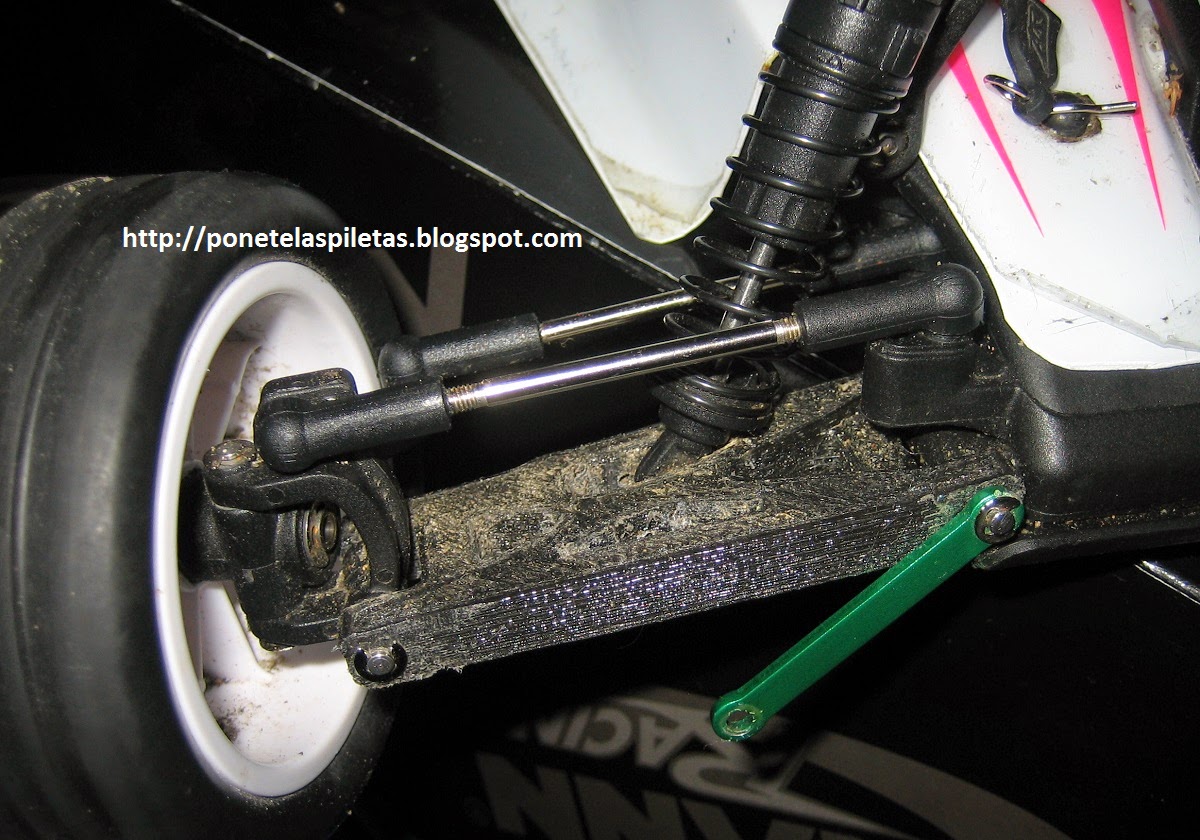
Ansmann Racing Mad Rat Brazo de Suspension Delantero imprimible

Ansmann Racing Mad Rat Front Suspension 3D Printable Arm - .stl .igs .stp CATIA .model
Ansmann Racing Mad Rat Vorderachse Querlenker für 3D-Drucker


This is my reinforced version of the front suspension arm for the Ansmann Racing Mad Rat RC car.

I designed it taking the main dimensions from the original, but adding some thickness and material in those areas that shown to be weak to me (I broke a couple of the original ones in some hard jumps). 


This design is a right-hand fully printable version. If you need the left hand, you just need to mirror this model in your printer sofware or your CAD.


Sunday, 3 August 2014

Extra de vida para esa aspiradora de mano que siempre se queda corta

Giving some extra life to that hand vacuum cleaner that always dies before finishing


Estás cansado de pagar por la aspiradora en la estación de servicio? Vivís en un apartamento y no tienes conección eléctrica donde aparcas el coche? Si es así, entonces estás necesitando una aspiradora de mano urgentemente!
Are you tire of paying for the vacuum cleaner of the gas stations? Are you living in an apartment and you don't have a 220V connection close to your car? Then, you are needing a hand vacuum cleaner!

Pero si ya tenés una, sabrás que la batería de estas no suele durar mas de 3 o 4 minutos de aspiración continuada, antes de empezar a perder "chicha".. Incluso las mas caras, esas que vienen con baterías de Li-Ion, normalmente no te dan suficiente tiempo para poder aspirar a fondo el coche.
But if you already have (or had) one, you know that they have not more than 3 or 4 minutes of life before they start running out of juice... Even the expensive ones, with Li-Ion batteries, they are not giving enough time to cleane deeply a car.

Así que porqué no darle un poco de vida extra, justo esos minutos que te faltan normalmente?
So, why not adding some extra power to extend the life just those minutes more you need?


Sunday, 11 May 2014

Sistema integrado para FPV con pantalla LCD de 7" y estructura 3D-printed - 1a entrega

Integrated FPV system with 7" LCD screen and 3D-printed frame - 1st delivery


Hace ya un tiempo que compre los componentes para poder montar un FPV con los aeromodelos que tengo, o un hipotético renacimiento del quadcopter en el futuro, pero por falta de tiempo, otros proyectos y la falta de una pantalla o unas gafas FPV (googles) había dejado el proyecto en stand-by hasta ahora.
It's been a while that I've bought some components for building up my FPV system to be mounted in my planes or a future re-born of the quadcopter but due to a lack of time, other projects and the missing screen or googles to view the transmission the project was in stand-by.

El problema era que no estaba seguro de invertir 300€ en los googles sin tener claro si luego realmente les iba a sacar partido, así que me decidí por comprar una pantalla LCD de 7" en ebay que me costó menos de 40€ incluyendo la placa controladora con entrada para AV, VGA y HDMI.
As I was not sure if investing almost 300€ in the googles was going to make sense, I just decided to go for a 7" LCD screen that I've bougth in ebay for less than 40€, including the controller board (with AV, VGA and HDMI inputs).

Pero lo siguiente era poner todos los componentes juntos, así que diseñé un pequeño marco para imprimirlo con la impresora 3D que me sirviera para acomodar los componentes de una manera compacta, y en un futuro tal vez poder montar el conjunto sobre la radio RC o en un trípode.
But now I needed to put everything together, so I designed a 3D-printed frame to arrange the componentes with the idea of keeping the system compact (and maybe later on mount this directly on top of the RC radio).


Sunday, 6 April 2014

Soporte para GoPro Hero 3 y Axial Dingo

GoPro Hero 3 mount for Axial Dingo

Se trata de un soporte para la cámara GoPro Hero3 para poder montarla arriba del crawler Axial Dingo, mas precisamente en la barra antivuelco, aunque también puede usarse para otras aplicaciones.
This is a very simple mount for the GoPro Hero 3 camera designed to be position in the Axial Dingo roll cage, but it can also be used in other applications. 


Tuesday, 11 March 2014

Prusa i3 by diegudio - Disipador para hot-end

Prusa i3 by diegudio - Hot-end heat dissipator

Después de probar con diferentes configuraciones de hot-ends, incluyendo el que he fabricado yo mismo usando una barra roscada de bronce y alambre de Ni-Chrome, creo que estoy en condiciones de compartir con ustedes lo que (espero) sea mi configuración definitiva.
After doing several trials with different hot-end configurations, including the one that I've made myself usign a bronze bolted bar and Ni-Chrome wire, I think I'm in position of sharing my (hopefully) definitive configuration.


El hot-end que se puede ver en la imagen de arriba me dió satisfacciones por el hecho de haberlo hecho yo mismo, pero también me dió muchos dolores de cabeza porque al enrollar el Ni-Chrome directamente sobre la cinta Kapton esta última se quemaba muy fácilmente y cada tanto había que desarmar todo y volverlo a armar. Tampoco era un buen montaje para el termistor, ya que el mismo quedaba apoyado directamente sobre la kapton, y el montaje no era muy firme, lo que generaba oscilaciones de la medición. Finalmente, el diámetro de extrusión tampoco era ideal, ya que al haberlo hecho con una broca de 0.5 manualmente, el agujero seguramente tendría un diámetro algunas centésimas mayor, por lo que el filamento extruído era algo mas grueso.
The original bronze-Ni-Chrome hotend (see picture above) was giving me too many problems, although the printing quality was considerably good for being self-made with just a hand drill (no special tools). The assembly was not so stable, the Kapton tape was burning due to the direct contact with the Ni-Chrome and it was not lasting too long, the thermistor connection was also unstable and I was having an annoying temperature fluctuation, and last but not least, the diameter of the extruder filament was a little big (perhaps doing the hole manually with normal tools was giving a higher diameter than the expected).

Así que me decidí a comprar algunos componentes pre-fabricados para mejorar el hot-end, que como todos sabemos es la parte más sensible de las impresoras 3D. Compré una resistencia de cartucho, termistores encapsulados (que aguantan +300ºC teóricamente), el bloque de aluminio donde se monta todo y el cuerpo roscado para filamento de 1.75mm que es lo que tengo en casa. También compré el cabezal extrusor roscado, por si luego quiero experimentar con diámetros mas pequeños.
So I bought some components to start improving my work. I bought the heating cartridge, some more thermistors (the transparent ones, up to +300º), the aluminum heater block and the main body for 1.75mm filament, with an exchangeable head with 0.5mm hole (exchangeable so that in the future I can try smaller holes).

Sin embargo, no quería comprar absolutamente todo, incluyendo los aisladores de PEEK o PTFE, principalmente porque si lo compramos todo hecho, dónde está la gracia no???... Tampoco estaba seguro de que comprando un aislador pre-fabricado me fuese a encajar bien en mi extruder.
However, I didn't want to buy the whole stuff, including the PEEK or the PTFE isolators, mostly because if I bought everything then where is the fun??  I was not sure that with the typical cilindrical isolator I was going to be able to attach the hot-end to the extruder.

Así que la razón de este post es enseñarles cómo resolví el montaje y al mismo tiempo el problema de disipación de calor.
So the reason of this topic is to show you how I solved the mounting issue and at the same time, the most important thermal dissipation issue.


Friday, 11 October 2013

PRUSA i3 by diegudio - 3a Entrega - Electrónica

PRUSA i3 by diegudio - 3rd Delivery - Electronics

Una de las cosas mas importantes y tal vez mas complejas para los principiantes es lidiar con la electrónica y el firmware cuando se comienza en el mundo de las impresoras 3D. 
One of the most important things (and maybe the most "complex" for the beginners) is dealing with the electronics & the firmware when starting in the reprap 3D printing world.

En este post trataré de explicarles básicamente cuáles son los componentes electrónicos necesarios para armar una impresora 3D, por lo menos en cuanto a la estructura básica y por supuesto tomando el ejemplo de mi impresora (pueden haber otras configuraciones, claro está). Luego postearé otra nota sobre el firmware, con algo mas de detalle.
In this post I'll try to explain you in a simple way the electronics needed in a normal 3D printer like the Prusa Mendel or Prusa i3. Regarding the firmware, I'll give you a short introduction here and later I will publish a full note regarding how to deal with it.


Sunday, 22 September 2013

PRUSA i3 by diegudio - Modelo CATIA 3D

PRUSA i3 by diegudio - 3D CATIA Model

Finalmente me hice de tiempo para continuar con el modelo 3D de mi version de la impresora reprap tipo PRUSA i3.
I've finally got some time to continue with the 3D modelling of my version of the PRUSA i3 printer.


Mas fotos y links a los archivos después del salto.
More pictures and links to the files inside.


Saturday, 10 August 2013

Diseño de avión imprimible para Playmobil

Printable Playmobil Airplane

Les presento aquí un avioncito simple para muñecos playmobil diseñado para ser impreso en impresoras 3D tipo reprap.
Los archivos se pueden descargar de los links que les dejo mas abajo, colgados de Thingiverse y GrabCAD.
El fuselage tiene que ser impreso boca abajo y por eso la carlinga (cabina del piloto) tiene una columna circular que hace las veces de soporte para el suelo ya que este queda en voladizo. Pueden usar esta columna o quitarla y usar la opción de dar soporte que del software de impresión que estén usando.
I present you here a very simple printable airplane for Playmobil toys that I've designed.
You can download the .stl files and also .stp or .igs from the following links in Thingiverse or GrabCAD.
The fuselage should be printed upside down, that's why it has a circular column in the playmobil cabin to support the floor when printing it as a bridge. You can either use this column or remove it and use your preferred support setup in your printing software.


Sunday, 17 March 2013

DIEGUDIOS - Impresora 3D RepStrap - 4a entrega

DIEGUDIOS - 3D RepStrap Printer - 4th delivery

Aquí les traigo mas fotos del avance de mi impresora 3D tipo RepRap (RepStrap). Como pueden ver en las fotos, falta muy poco para la finalización. También pueden ver que he fabricado mi propio hotend, pero ya luego les daré mas detalles de eso en un próximo post.
I bring you here more pictures of the advance of my RepRap (repstrap) printer project. As can be seen, I've advanced quite a lot in the assembly. You can also see that I've created my own hotend, but I will come back with the details in another post.


Sunday, 13 January 2013

DIEGUDIOS - Impresora 3D RepStrap - 2da entrega

DIEGUDIOS 3D RepStrap printer - 2nd delivery

¿RepRap o RepStrap? Me he dado cuenta luego de informarme mejor que mi impresora queda mejor encuadrada como una RepStrap que una RepRap, ya que va a estar fabricada con muchas piezas que ya dispongo, que he comprado en ferreterías locales o por internet, y que no se trata de un diseño duplicado usando piezas duplicadas (RepRap).
RepRap or RepStrap? I've figured out that my future printer is more a RepStrap than a RepRap, as I'm using whatever things that I'm finding in between my stuff, in local warehouses and in internet ("straps") and not using a duplicated design (RepRap).

La versión del diseño que les he mostrado en la 1ra entrega ya ha cambiado dado que el proyecto evoluciona. Originalmente había pensado en las guías IGUS DryLin W para los carros deslizantes, pero revisando el sitio de IGUS encontré las DryLin N, que son algo mas baratas y además por menos precio puedo pedir una guía mas ancha (80mm de carro en vez de 40mm). Suponiendo que la rigidez de la guía es similar (aunque esto no es del todo cierto), el carro de 80mm de pisada debería mejorar la rigidez del carro transversal, al otorgarle mayor ancho de soporte.
The version shown in my last post have changed, as the project evolves. Originally I decided to use IGUS DryLin W guides, but checking IGUS website I've found the DryLin N guides, that are a little bit cheaper, and for less price I get a wider guide (80mm instead of 40mm). Supposing that the rigidity of the skid-guide package is similar, the 80mm width should help to get a stiffer Y and X sliding carts.


IGUS  DRYLIN W
 

IGUS  DRYLIN N


El resto de la configuración se mantiene igual, salvo que he rotado una de las correas para simplificar el montaje. Les dejo las imágenes del nuevo diseño.
The rest of the configuration remains the same, except of one of the belts that I turned 90º to simplify the assembly. I leave you here some pictures of the new design.


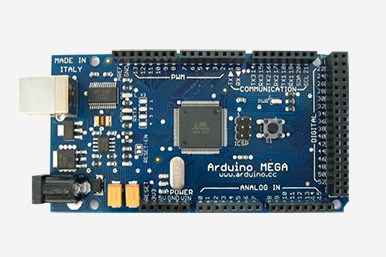
Finalmente comentar que ya he definido también la electrónica: utilizaré un sistema RAMPS 1.4 para poder montarlo sobre mi Arduino Mega que ya tenía en casa. El RAMPS es una especie de interface que simplifica la conexión de los controladores de los motores paso a paso con el Arduino. Los controladores elegidos son tipo Polulu, con chip A4988 que tiene corte por sobre corriente para auto-protegerse. Toda la información necesaria de estos equipos la pueden encontrar en http://www.reprap.org
Finally I would like to comment that I've defined also the electronics: I will use a RAMPS 1.4 system so I can use my Arduino Mega that I have at home. The RAMPS is a kind of interface that simplifies the connection between the Arduino and the stepper-motor controllers. And talking about the controllers, I will use 4 controllers similar to Polulu type, using the A4988 chip that includes a over-current shut-off for auto-protection. All the necessary info about these systems you can find it at http://www.reprap.org

 ARDUINO MEGA

RAMPS 1.4

ARDUINO + RAMPS + MOTOR CONTROLLERS